What does BRCGS stand for?
BRCGS stands for Brand Reputation through Compliance Global Standards. It is a food safety and quality certification framework used by manufacturers, retailers, and supply chain businesses to show they meet recognised requirements for product safety, legality, and quality.
This article explains what the acronym means, where the standard came from, how BRCGS certification works, and why it matters for food businesses, packaging suppliers, storage providers, and other organisations in regulated supply chains.
Key takeaways
- BRCGS is the current name; older certificates may still say BRC or BRC Global Standards.
- The initials came from the British Retail Consortium, which created the standards for food safety.
- BRCGS certification improves consistency in hazard control, traceability, site standards, and documented procedures.
- Retailers often require recognised schemes, so BRCGS can improve supplier approval and market access.
- BRCGS covers more than food, including packaging, storage, distribution, and other supply chain activities.
- Certification requires an on-site audit, clause review, gap analysis, corrective action, and approved certification body.
- Choose the standard by site scope, including products, processes, storage conditions, and services provided.
What BRCGS stands for and how the name changed
Use the current name BRCGS when checking certificates, audit reports, or supplier claims, because older paperwork may still use BRC or BRC Global Standards. The initials originally came from the British Retail Consortium, the UK trade association that created the standards for food safety and supplier assurance.
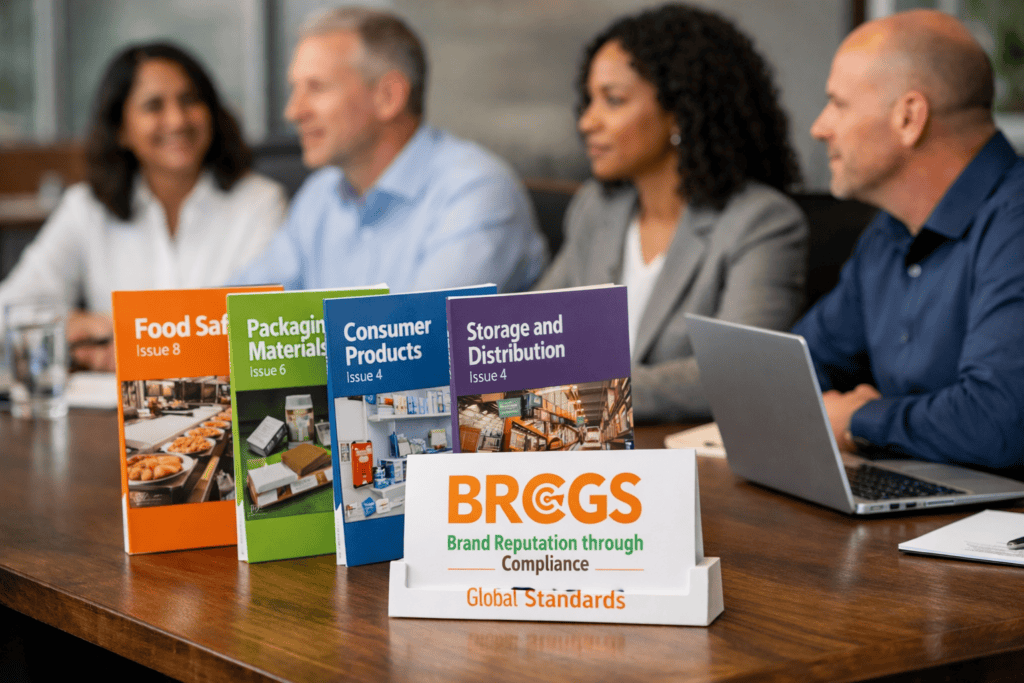
The name changed as the scheme expanded beyond its retail origins and gained wider international use. BRC Global Standards later adopted the shorter form BRCGS, while the standards themselves continued to cover areas such as food safety, packaging materials, storage and distribution, and consumer products. The organisation now presents its standards and certification framework under the BRCGS brand.
That history affects how documents are read. A certificate issued under an older version may refer to BRC or BRC Global Standards, but it can still relate to the same certification scheme. When reviewing compliance records, check the issue date, standard name, site scope, and audit version rather than relying on the branding alone.
Why BRCGS standards matter in food safety and supply chains
- Can reduce supplier risk and tighten audit controls
- Gives sites, suppliers, and buyers a shared framework for hazard control, traceability, and documented procedures
- Supports due diligence through clear expectations for senior management commitment, HACCP-based systems, and supplier approval
- Often helps with retailer access where recognised food safety schemes are required
- Makes audit findings easier to compare across multiple sites and countries
- Other schemes may also support food safety and supplier assurance
- Some buyers accept ISO-based certification or customer-specific standards instead
- The useful question is not just whether a supplier is certified, but which standard and scope the certificate covers
Certification against BRCGS standards can reduce supplier risk, tighten audit controls, and improve access to retailers that require recognised food safety schemes. The strongest reason to use BRCGS in food manufacturing and supply chains is consistency. It gives sites, suppliers, and buyers a shared framework for hazard control, traceability, site standards, and documented procedures.
That consistency helps businesses prepare for audits in a structured way and spot gaps before they turn into non-conformities, product withdrawals, or customer complaints. It also supports due diligence by setting clear expectations for senior management commitment, HACCP-based food safety systems, and supplier approval. For teams building competence, BRC Courses help translate the standard into day-to-day controls on site.
Other schemes also support food safety and supplier assurance, and some buyers accept alternatives such as ISO-based certification or customer-specific standards. BRCGS often wins where retail supply chains need detailed prescriptive requirements and a format that procurement, technical, and compliance teams already recognise. That makes supplier approval faster and audit findings easier to compare across multiple sites and countries.
Which sectors and products BRCGS certification covers
| Activity or site type | Relevant BRCGS scope in the article |
|---|---|
| Food manufacturing | Food Safety covering hazard analysis, site controls, traceability, and product safety systems |
| Packaging manufacturers | Packaging Materials standard for sites making packaging used in supply chains |
| Warehouses and logistics operations | Storage and Distribution standard for storing and handling products through the supply chain |
| Consumer product and traded goods operations | Consumer Products, plus agents and brokers or sites handling traded goods depending on activity under audit |
A common mistake is to treat BRCGS as a food-only scheme. In practice, it covers several parts of the supply chain, with separate standards based on what a site makes, packs, stores, or handles.
Coverage includes food manufacturing across processed foods, raw ingredients, chilled and frozen products, and high-risk or high-care operations. BRCGS Food Safety covers hazard analysis, site controls, traceability, and product safety systems. Related standards also apply to packaging materials, storage and distribution, and consumer products.
BRCGS also covers sectors that support food and retail supply chains without making the final product. That includes packaging manufacturers, warehouses, logistics operations, agents and brokers, and sites handling traded goods. Each standard sets requirements for the activity under audit, so a packaging plant faces different controls from a cold store or food factory.
The system can follow products and materials across multiple supply stages, not just the final manufacturer. When a buyer asks if a supplier is BRCGS certified, the useful question is which standard and scope the certificate covers.
How BRCGS certification and audits work in practice
Certification requires passing an on-site audit against the correct BRCGS standard and issue, not paperwork alone. Match the site’s activities to the right standard, review the clauses, complete a gap analysis, fix weak points, then book an audit with a BRCGS-approved certification body in the official BRCGS directory.
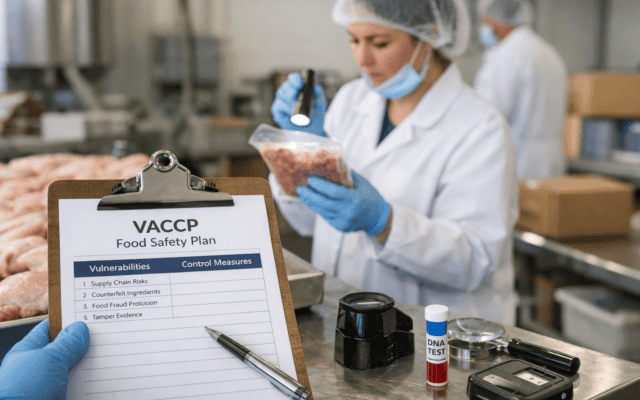
The audit tests whether documented procedures work in daily operations. Auditors review HACCP or hazard controls, traceability, supplier approval, training records, site standards, corrective actions, and internal audits. They also inspect the site, interview staff, and check that records are current, accurate, and followed in practice.
After the audit, the site receives a grade if it meets the standard and closes non-conformities on time. Unannounced audits apply in some schemes or customer programmes, so controls must work every day, not only during audit week.
Common mistakes include choosing the wrong standard, relying on template documents that do not match real processes, and treating the audit as a one-off event. Sites also lose marks when records are incomplete, corrective actions remain open, or staff cannot explain required procedures.
How to choose the right BRCGS standard for your business
Choosing the right BRCGS standard prevents audit failure, avoids wasted preparation, and keeps certification aligned with site activity. The key constraint is scope: the standard must match the products, processes, storage conditions, and services the business provides.
A food manufacturer should review BRCGS Food Safety, while a packaging producer may need BRCGS Packaging Materials. Sites focused on storage and distribution should check BRCGS Storage and Distribution. If the business handles consumer products rather than food, BRCGS Consumer Products may fit better.
Use the main activity at the certified site as the starting point, then test edge cases carefully. Mixed operations can require more than one standard, especially where manufacturing, packing, and warehousing sit under separate controls or legal entities. The official BRCGS pages and approved certification bodies can confirm scope before booking an audit.
A poor match creates delays, extra cost, and certificates customers may reject. A correct match shortens preparation, keeps the audit focused, and gives buyers a certificate that reflects the site’s role in the supply chain.
Frequently Asked Questions
What does BRCGS stand for in food safety and compliance?
BRCGS stands for Brand Reputation through Compliance Global Standards. In food safety, it refers to a widely used certification framework that sets requirements for food manufacturing, packaging, storage and distribution. Businesses use it to show they meet recognised safety, quality and legal compliance standards.
Why did BRC change its name to BRCGS?
The key change was branding, not a new standard. BRC became BRCGS to reflect its wider role beyond the original British Retail Consortium and to align the brand with its Global Standards programme. The new name made that broader international focus clearer.
What is the purpose of BRCGS certification?
Use BRCGS certification to prove that food safety, quality, and legal compliance controls meet a recognised standard. It helps businesses build trust with retailers, brand owners, and regulators. It also supports consistent processes, better risk control, and easier access to supply chains that require certified suppliers.
Which industries and products does BRCGS cover?
BRCGS applies where product safety, quality and legal compliance must be controlled through audited standards. It covers food manufacturing, packaging materials, storage and distribution, consumer products, retail, agents and brokers, and gluten-free certification. The standards are used across supply chains, from raw material handling to finished goods.
How does BRCGS differ from other food safety standards?
Eight global standards sit under the BRCGS scheme, covering food, packaging, storage, distribution and more. That gives businesses a broader framework than food-only standards. BRCGS also uses detailed site audits, graded results and clear requirements for supplier approval, traceability and senior management commitment.